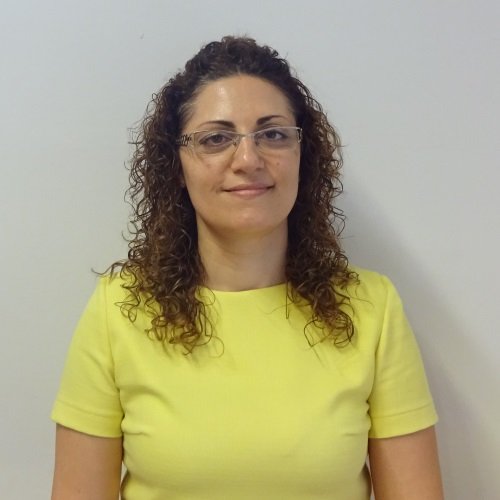
Eliada Pampoulou
Dr Pampoulou is a Speech and Language Therapist from her first degree (Higher Technological Education Institute of Patras, 2004) and an Assistive Technology Specialist through having completed her MSc (King’s College London, 2006). Her PhD thesis (King’s College London, 2015) brought together these fields, whereby she explored the experiences of professionals regarding their work with graphic symbols, such as Makaton, PCS and Widgit symbols. For her tertiary qualifications she received four different funding awards. The most recent funding pertained to her PhD research project, which was co-funded by the Republic of Cyprus and the European Regional Development Fund of the European Union through the Research Promotion Foundation of Cyprus.
As a speech and language therapist and specialist in assistive technology, Dr Pampoulou worked both in Cyprus in England in both the public and private sectors, supporting people with complex communication needs of different ages. Drawing on her clinical experience, she has created two communication books, one for children and another for adults (Pampoulou and Constanta, 2016). Additionally, she worked in England in one of the pioneering companies in the development of graphic symbols for special education, where during her employment she had the opportunity to work with a number of graphic symbol developers from both the UK and USA.
Dr Pampoulou’s research interests directly relate to the still novel area in Cyprus of Augmentative and Alternative Communication (AAC). Specifically, her focus is on the quality of AAC assessment and intervention outcomes as well as AAC systems acceptance. One of her current pioneering research projects is the development of an assessment tool for the selection of the most appropriate corpus/es of graphic symbols for AAC experts to use during the assessment process (Pampoulou and Fuller). It is Dr Pampoulou’s aspiration that through her research work she will continue supporting people with complex communication needs in order to communicate their thoughts and ideas effectively, thus increasing their chances of reaching their maximum potential.
As part of her contribution to the wider society, she has run a number of seminars and workshops in which she has been training both professionals and parents on issues concerning the AAC field. As an advocate of AAC, in 2018, she created a video (link provided below) with her undergraduate students as part of AAC awareness month, which is celebrated every October across the globe.
https://www.youtube.com/embed/bwUnolLgwMU
- Augmentative and Alternative Communication
- Acquired Communication Disorders
- Assistive Technology
- Graphic Symbols
2015: PhD, King’s College London, United Kingdom
Faculty of Social Science and Public Policy, Department of Education
Dissertation topic: The use of graphic symbols in inclusive primary schools an exploration of teachers’ and speech and language therapists’ experiences of graphic symbols
2006: MSc in Assistive Technology, King’s College London, United Kingdom
School of Biomedical and Health Sciences, Division of Applied Biomedical Research
Dissertation topic: Graphic symbol set selection considerations by speech and language therapists: a pilot study
2004: Bachelor in Speech and Language Therapy, Highest Technological Education Institute of Patras, Greece
Speech and Language Therapy
Dissertation topic: The use of a software tool to support students with learning difficulties.
Lecturer of Speech Therapy
Technological University of Cyprus
Duration: 2018 - Current
Research Fellow
Technological University of Cyprus
Duration: 2016-2018
Speech therapist
University of Nicosia: Multifaceted Center of Speech and Intelligence
Duration: 2016-2017
Laboratory of Augmentative/ Alternative Communication and AssistiveTechnology
AACTLab
The AACTLab is the first laboratory established in Cyprus specialising in Augmentative and Alternative Communication and Assistive Technology in the field of speech and language therapy. The AACTLab was created in 2019 by the Lecturer Eliada Pampoulou, Department of Rehabilitation Sciences, Cyprus University of Technology (CUT), Limassol, from her starting grant provided by the university.
The vision of AACTLab is to support people with severe complex communication issues in expressing their needs, thoughts and ideas, in comprehending linguistic information, participating in decision making (ex. medical assistance), whilst eventually developing and maintaining social relations. The laboratory aims to cover the various research and clinical needs in the field of Augmentative and Alternative Communication.
The AACTLab has the aim of ensuring the provision of high quality services to people with complex communication disorders, through the following main activities:
- conducting of local and international research
- development and modification of existing evaluation tools
- development of technological systems to be used for communication purposes
- training of university students, caregivers (e.g. relatives) and health professionals (e.g. speech and language therapists and nurses)
- creation of discussion groups focusing on topics relating to the support of people with acquired and complex communication disorders (please contact us if you would like to start one)
- collaboration with different bodies (e.g. academia and industry) from Cyprus and abroad
The AACTLab is fully equipped with up to date low and high technology systems, such as printed communication books, talking products, eye gaze systems, switches, among others. Below you can see some pictures of the laboratory´s equipment and some of the activities that it will focus on, such as the training of university students in the use of assistive technology.
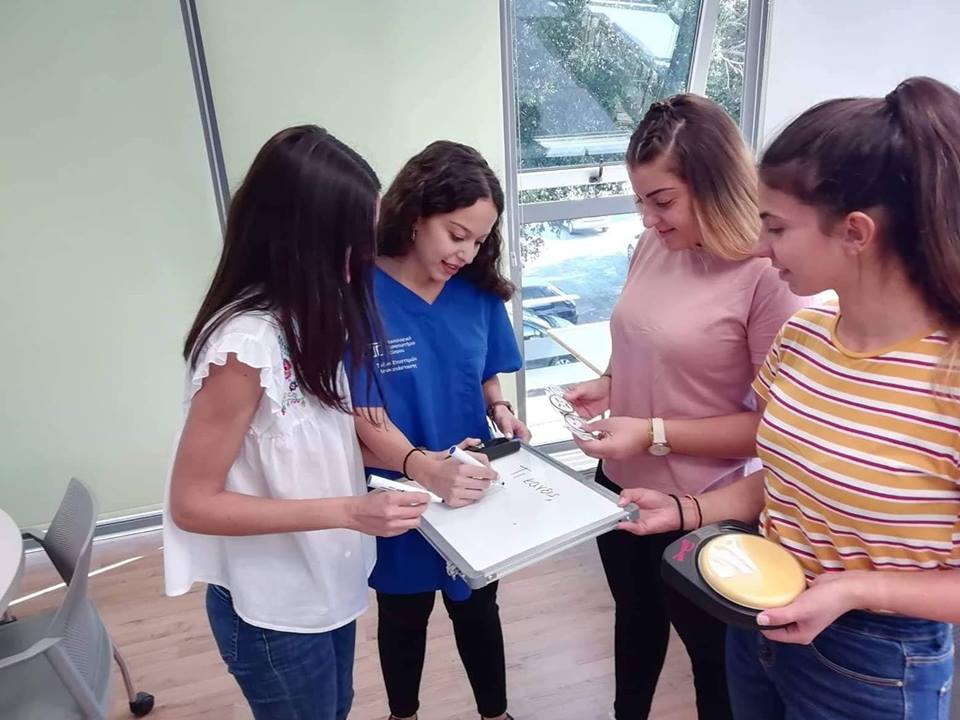
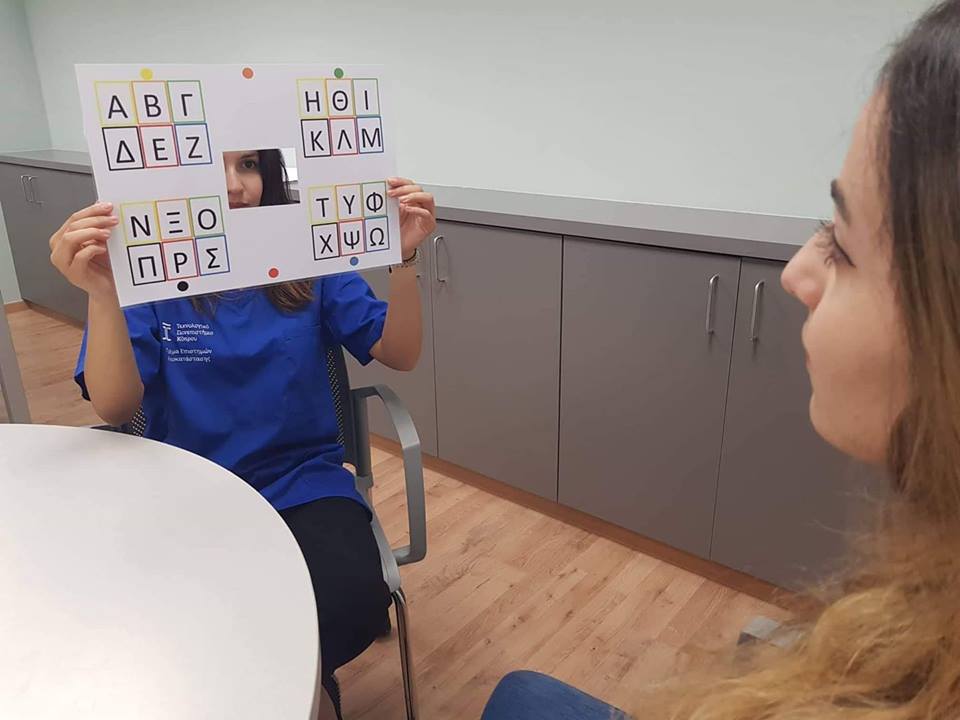
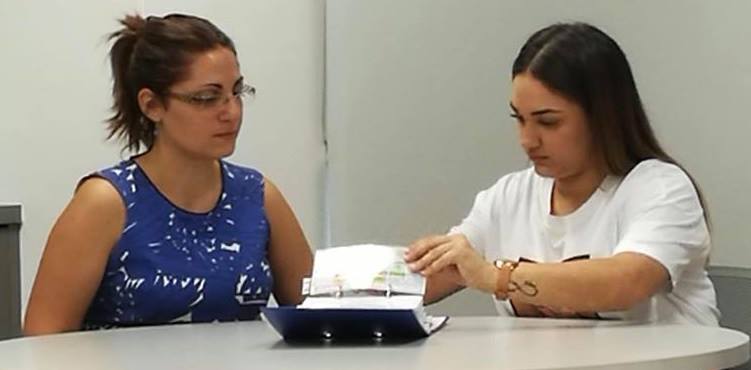
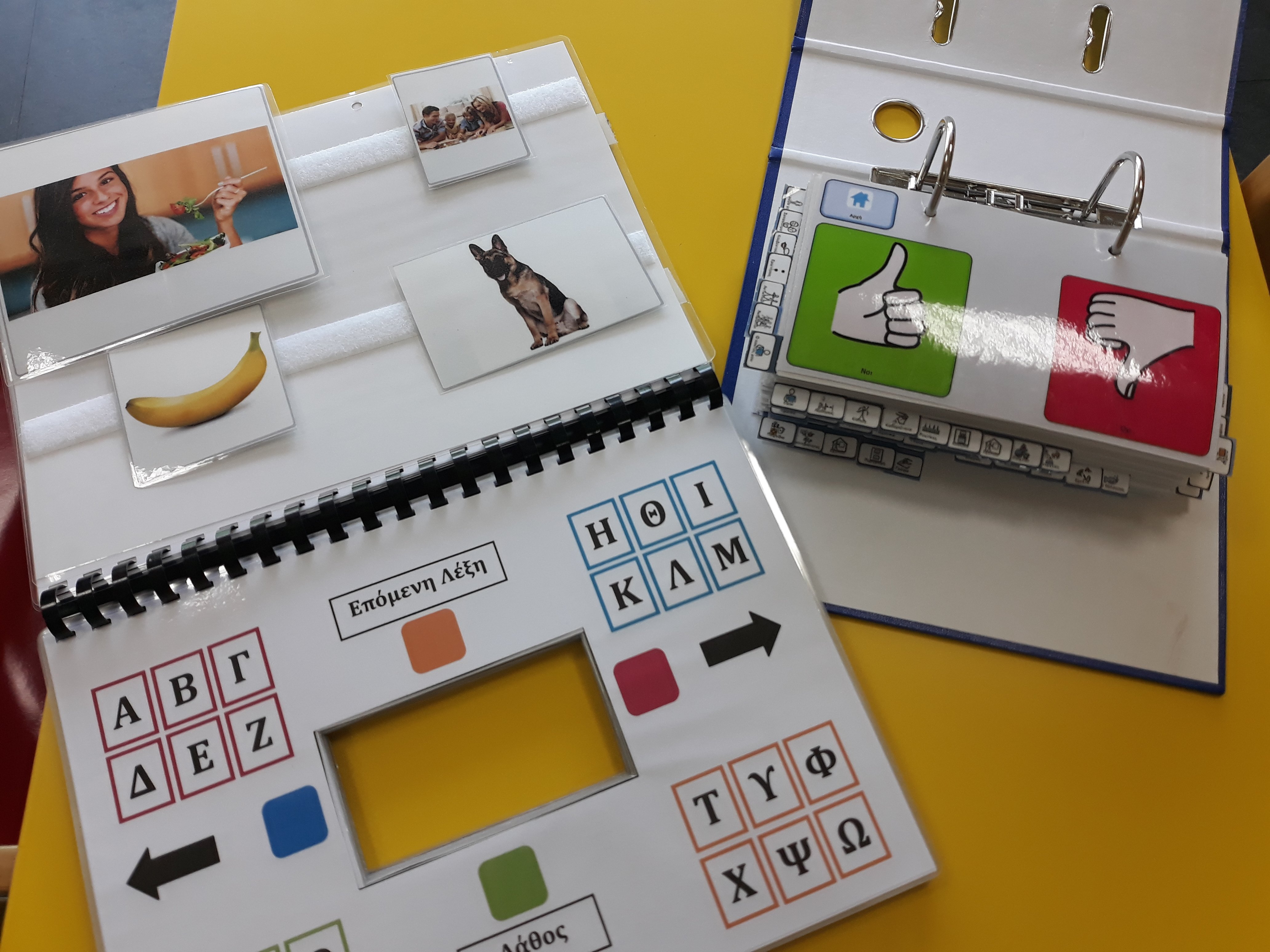
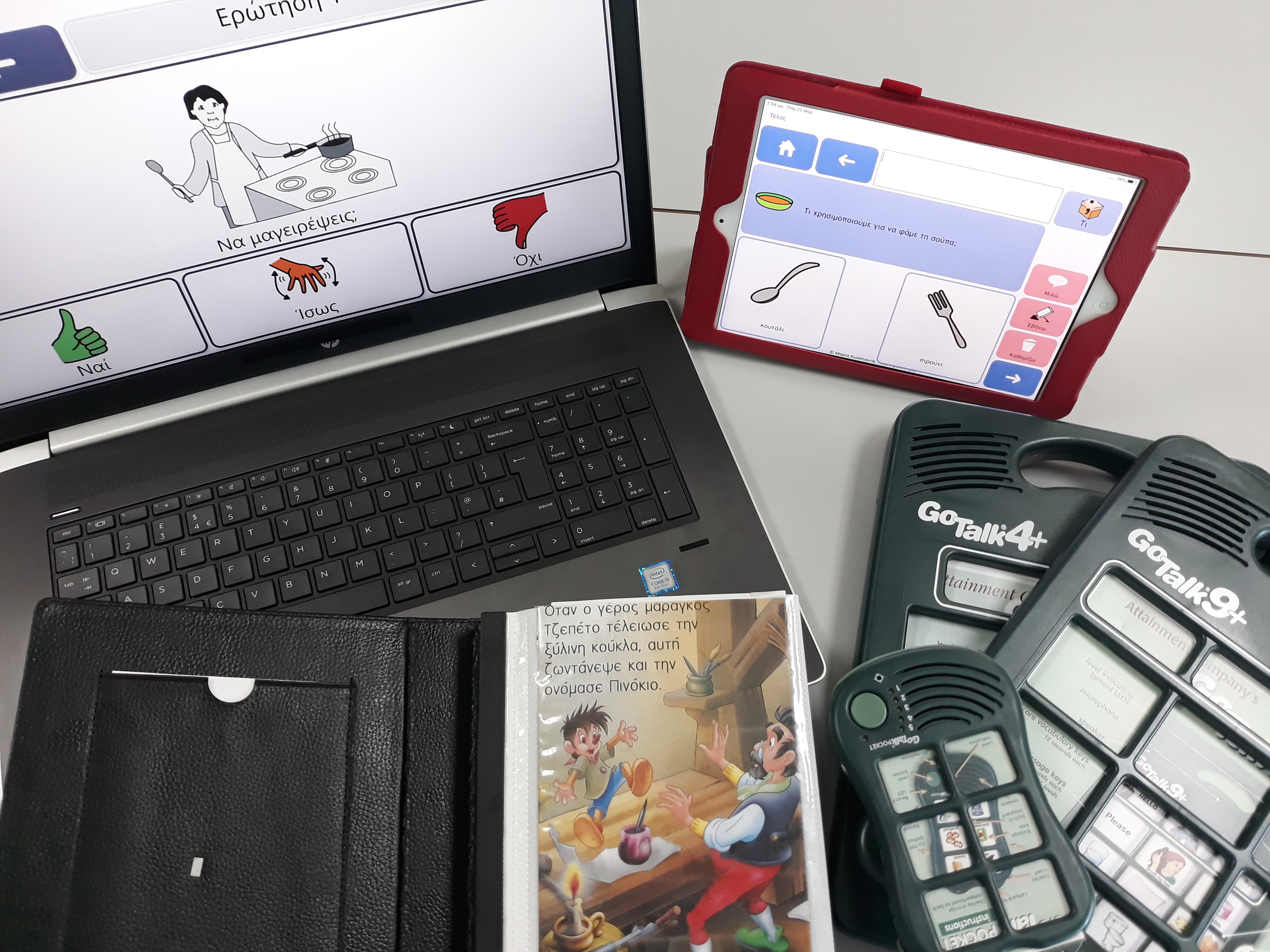
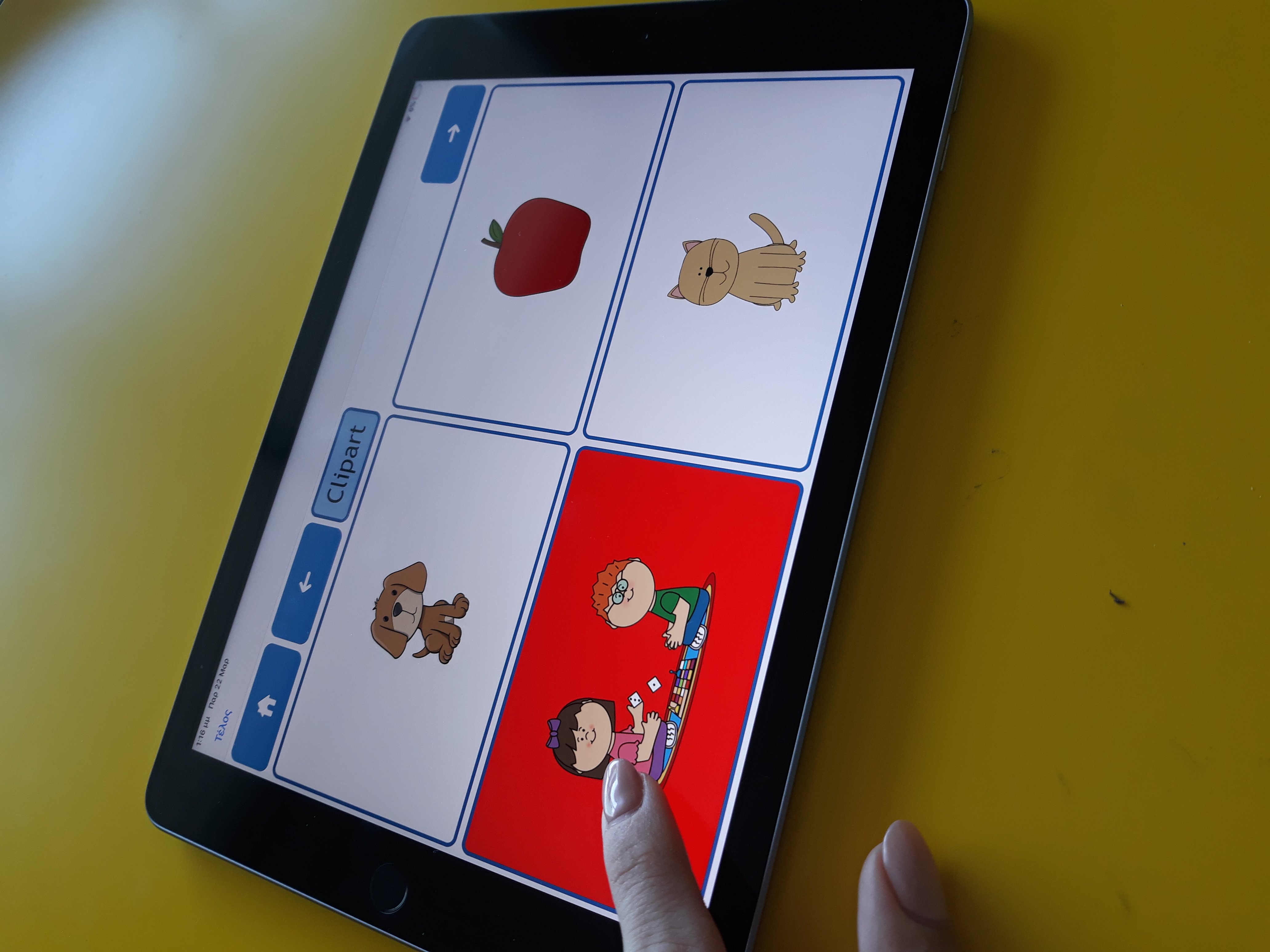
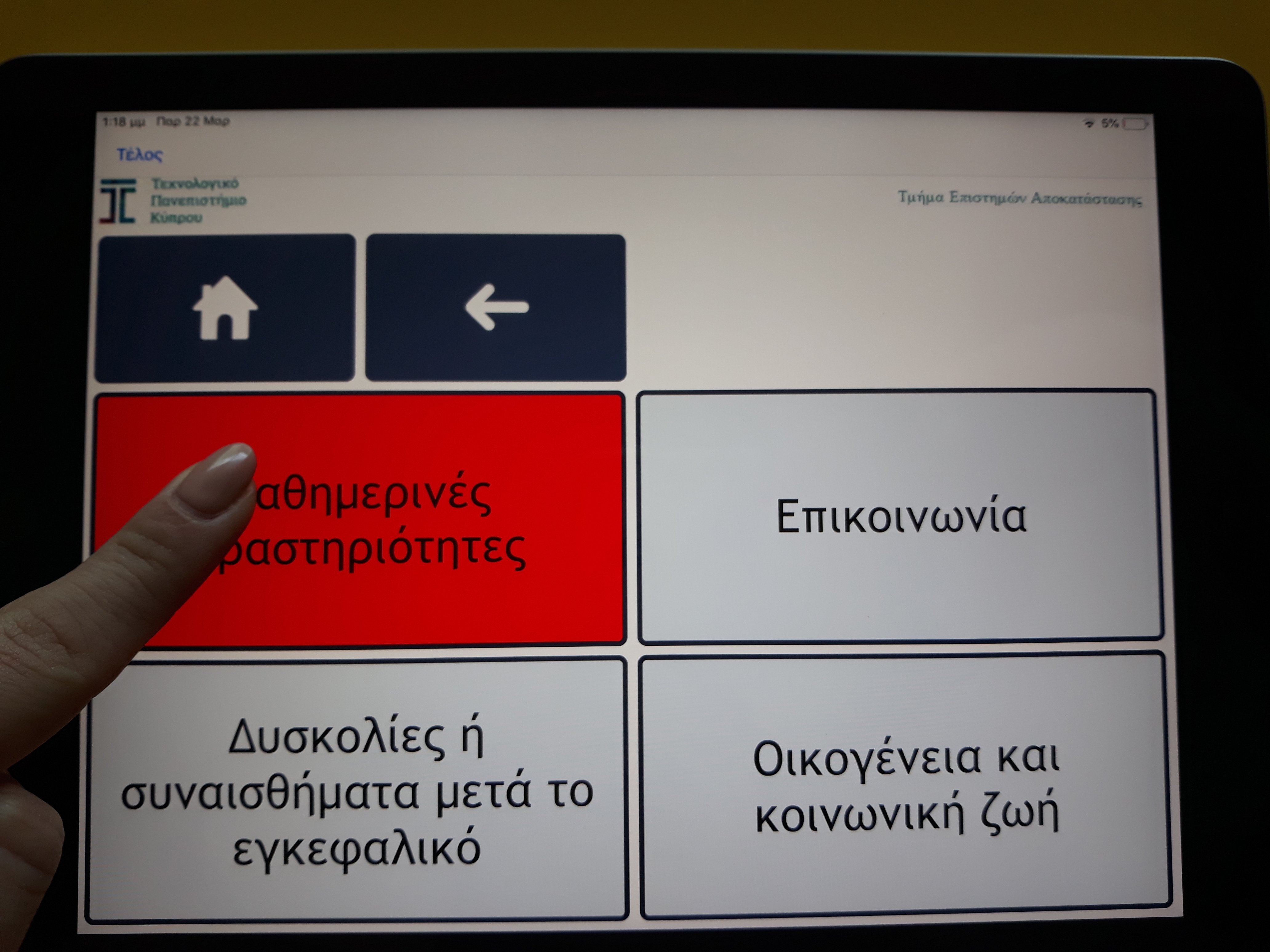
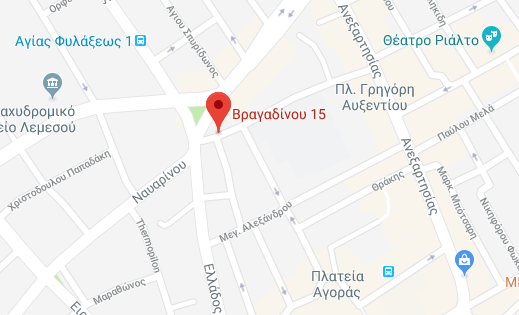
The laboratory is located at the Department of Rehabilitation Sciences of the Cyprus University of Technology, ZT3 building, 15 Vragadinou Street, Limassol, Cyprus.
https://goo.gl/maps/9CogTsZGowM2
Laboratory Director
Dr. Eliada Pampoulou
Lecturer of Speech and Language Pathology
Cyprus University of Technology
Project Coordinator of the project: i-TRAIN: Mobile Digital Training for Direct Care Workers dealing with Stroke Survivors
Duration: 2020 – 2022
Funding: Erasmus+ — EUR 248, 000
Director of the AACTLab (Infrastructure)
Developer of the Aided Symbol Assessment tool
Duration: 2018 – 2021
Funding: Cyprus University Technology Faculty Start-up Fund — EUR 40,000
Young Researchers of Cyprus Programme (PENEK/0609)
Duration: 2011-2013
Funding: Co-funded by the Republic of Cyprus and the European Regional Development Fund of the EU through the Research Promotion Foundation of Cyprus — EUR 65,000
Funding for MSc in Assistive Technology
Duration: 2005-2006
Funding: Engineering and Physical Sciences Research Council (EPSRC) Collaborative Training Account Bursary, King’s College London (full-scholarship)
Funding for MSc in Assistive Technology
Duration: 2005-2006
Funding: Awards Foundation A.G. Leventis – GBP 4,000
Funding for the Bachelor in Speech and Language Therapy
Duration: 2000-2004
Funding: Greek State Scholarship Foundation
PUBLICATIONS (peer-reviewed)
Book Chapters
- Pampoulou, E. (in publication). Augmentative and Alternative Communication: assessment of people with complex communication needs. In Kambanaros, M. Diagnostic issues in speech and language therapy.
- Pampoulou, E. and Fuller, D.R. Introduction to AAC symbols. In Lloyd, L.L., & Fuller, D.R. (Eds.). (in publication). Principles and practices in augmentative and alternative communication. Thorofare, NJ: Slack, Inc.
- Pampoulou, E. and Fuller, D.R. Aided AAC symbols. In Lloyd, L.L., & Fuller, D.R. (Eds.). (in publication). Principles and practices in augmentative and alternative communication. Thorofare, NJ: Slack, Inc.
- Fuller, D.R., and Pampoulou, E. AAC models and classification systems. In Lloyd, L.L., & Fuller, D.R. (Eds.). (in publication). Principles and practices in augmentative and alternative communication. Thorofare, NJ: Slack, Inc.
Scholarly Journals
- Pampoulou, E. and Fuller, D.R. (under peer review). Introduction of a New AAC Symbol Classification System: The Multidimensional Quaternary Symbol Continuum (MQSC). Journal of Enabling Technologies.
- Fuller, D.R. and Pampoulou, E. (under peer review). The AAC Communication Model: Revisiting the Means to Select and Transmit. Journal of Enabling Technologies.
- Eden, V., Pampoulou, E., Kambanaros, M., and Murphy, J. (under peer review). Communication Abilities and Quality of Life for People with Aphasia by using Talking Mats as a Treatment Method in Speech and Language Therapy. Aphasiology.
- Xeta, C., Kyranou, M., and Pampoulou, E. (under peer review). Communicating with mechanically ventilated patients who are awake. A qualitative study on the experience of Critical Care Nurses in Cyprus during the COVID-19 pandemic. Journal of Annals of Intensive Care.
- Gregoriou, G., Pampoulou, E., and Kambanaros, M. (under peer review). The impact of dementia on family carers using the ICF framework. Journal of Inquiry.
- Giannikas, C. and Pampoulou, E. (under peer review). Implementing Blended Learning in Higher Education Programmes: The Cypriot context. Research in Learning Technology.
- Pampoulou, E. and Fuller, D.R. (2020). Exploring AAC graphic symbol choices: a preliminary study. Journal of Enabling Technologies. 14 (3), pp. 171-185. DOI: 10.1108/JET-03-2020-0013
- Pampoulou, E. and Diamanti, I. (2020). Graphic symbol preferences of adults with disabilities in one non-profit foundation in Greece. Journal of Enabling Technologies, 14(3), pp. 157-169. DOI: 10.1108/JET-12-2019-0057
- Theodorou, E. and Pampoulou, E. (2020). Investigating the Assessment Procedures for Children with Complex Communication Needs. Communication Disorders Quarterly 1(14) pp. 1-14. DOI: 10.1177/1525740120960643
- Pampoulou, E. (2019). Speech and language therapists’ experiences supporting adults with acquired communication disorders. Disability Rehabilitation Assistive Technology, 14(5):471-478. DOI: 10.1080/17483107.2018.1463401
- Pampoulou, E., Theodorou E., and Petinou, K. (2018). Augmentative and Alternative Communication in Cyprus: Preliminary Survey. Journal of Child Language Teaching and Therapy. 34(1) pp.5-21. DOI: 10.1177/0265659018755523
- Pampoulou, E. (2017). Graphic symbols terminology: a call for a consensus. Journal of Enabling Technologies. 11(3), pp.1-9. DOI: 10.1108/JET-02-2017-0008
- Pampoulou, E. (2017). Exploring speech and language therapists and teachers’ experiences when choosing graphic symbol set(s) for their students in inclusive primary schools in England and Cyprus. Journal of Enabling Technologies. 11(2) pp.49-58. DOI: 10.1108/JET-07-2016-0014
- Pampoulou, E. (2016). Graphic symbol practices as a whole school approach in two inclusive primary schools in England and Cyprus. Journal of Technology and Disability. 28 (1,2) pp.31-45. DOI: 10.3233/TAD-160442
- Pampoulou, E. (2016). Collaboration between speech and language therapists and school staff when working with graphic symbols. Journal of Child Language Teaching and Therapy. 32(3) pp.361-376. DOI: 10.1177/0265659016647996
- Kambouri, M., Pampoulou, E., Pieridou, M. and Allen, M. (2016). Early years teachers’ understanding and use of graphic symbols: A case study in relation to the teaching of science. Eurasia Journal of Mathematics, Science and Technology Education.12(9) pp.1-19. DOI: 10.12973/eurasia.2016.1275a
- Pampoulou, E., and Detheridge, C. (2007). The role of symbols in the mainstream to access literacy. Journal of Assistive Technologies. 1(1) pp. 21-27. DOI: 10.1108/17549450200700004
Conference Proceedings
- Gregoriou, M., Pampoulou, E., and Millis, G. (2021). Promoting social equality in inclusive education: mapping the experience of parents of children who rely on Augmentative and Alternative Communication. International Scientific Conference of the University of Latvia.
- Constanta, M., Theodorou, E., and Pampoulou, E. (2018). Intensive language intervention for a student with developmental language disorders and learning disabilities. 15th Pancyprian Conference of Cyprus Pedagogical Association.
- Theodorou, E., Pampoulou, E. (2018). Investigating the assessment procedures for children with Complex Communication Needs: The Participation Model. Journal of Communication Matters.
- Theodorou, E., Pampoulou, E. and Petinou, K. (2016). Provision of Augmentative and Alternative Communication services to people with disabilities. 14th Pancyprian Conference of Cyprus Pedagogical Association.
- Pampoulou, E. and Abbott, C. (2013). Visual Timetables, Journal of Communication Matters, 27(2), pp.35-38.
- Pampoulou, E. and Angelides, P. (2012). The use of graphic symbols to promote inclusion in two schools in Cyprus. 8th PanHellenic Conference of Pedagogical Company of Greece.
- Greenstock, L. and Pampoulou, E. (2010). An introduction to two pieces of recent research in the use of graphic symbols, Journal of Communication Matters, 24(2) pp.32-35.
- Pampoulou, E. (2008). Graphic symbols in the prevention, diagnostics and treatment of communication disorders. 3rd National Congress of Bulgarian National Association of Logopedists. Sofia, Bulgaria.
- Pampoulou, E. and Detheridge, C. (2007). The role of symbols to access literacy. 3th Conference of Panhellenic Association of Logopedics. Athens, Greece.
- Pampoulou, E. (2007). Review of better living through technology, Journal of Assistive Technologies 1(2), pp. 54-55.
At Cyprus University of Technology, Limassol:
Undergraduate Courses
- Introduction to Communication Disorders
- Psychophysiology of Hearing and Speech
- Language-Based Learning Disorders
- Neurogenic Motor Speech Disorders
- The use of Computers and New Technologies in Speech Therapy
Postgraduate Courses
- Implementation Methods in Augmentative and Alternative Communication for People with Developmental Disabilities (Theory and Lab)
At European University Cyprus, Nicosia:
Undergraduate Course
- Introduction to Speech and Language Therapy
- Clinical Topics in Speech and Language Therapy
Director of the AAC Sig Group (part of the work undertaken at the AACTLab)
Cyprus University of Technology
Duration: 2020 – Current
Elected member of the Senate Board
Cyprus University of Technology
Duration: 2020 – Current
Elected member of the Faculty of Health Sciences Board
Cyprus University of Technology
Duration: 2020 – Current
Elected member of the Internal Quality Assurance’ Committee
Cyprus University of Technology
Duration: 2020 – Current
Elected member of the Undergraduate Studies Committee
Cyprus University of Technology
Duration: 2019 – Current
Elected member of the Health and Safety Committee
Cyprus University of Technology
Duration: 2019 – Current
Elected member of the Library Committee
Cyprus University of Technology
Duration: 2019 – 2020
Member of the Department of Rehabilitation Sciences Board
Cyprus University of Technology
Duration: 2018 – Current
AAC Consultant/Trainer
Theotokos Foundation
Duration: 2018 – Current
AAC Consultant/Trainer
Pedagogical Institute of the Ministry of Education and Culture
Duration: 2015 – Current
Scientific Societies
Member of the International Society for Augmentative and Alternative Communication (ISAAC)
Year: 2021 – Current
Secretary of the Cypriot Committee of the European Speech and Language Therapy Association (ESLA)
Year: 2020 – Current
Affiliated member of the American Speech-Language-Hearing Association (ASHA)
Year: 2017-2018
Member of the ISAAC
Year: 2012 – 2013
Member of the ISAAC
Year: 2008 – 2010
Member of the ISAAC
Year: 2006 – 2008
Member of the Cyprus Speech Therapy Association
Year: 2004 – Current
Research Groups
Director of the AACTLab, Cyprus University of Technology
Year: 2020 – Current
Member of the Talking Mats SIG Group
Year: 2020 – Current
Material
Εισαγωγή Επαυξητική και Εναλλακτική Επικοινωνία
Επαυξητική και Εναλλακτική Επικοινωνία - Μύθοι και Αλήθειες
Επαυξητική και Εναλλακτική Επικοινωνία - Θετικά και Αρνητικά
Επαυξητική και Εναλλακτική Επικοινωνία - Πλεονεκτήματα και Μειονεκτήματα
Επαυξητική και Εναλλακτική Επικοινωνία - Ποιότητα Ζωής
Videos
Introduction to Augmentative and Alternative Communication
Augmentative and Alternative Communication: myths and truths
Επαυξητική και Εναλλακτική Επικοινωνία: μύθοι και αλήθειες
Augmentative and Alternative Communication: advantages and disadvantages